

Cart
0

Last Updated: October 24, 2026
Quick Summary
Stroller wheel repair is the practice of cleaning, inspecting, adjusting, and replacing worn wheel components so a stroller rolls smoothly and safely. It covers everything from clearing hair from an axle to swapping a punctured inner tube. Work from the cheapest fix to the most invasive, and always identify your tire type before ordering parts.
- Clean wheels with a dry soft-bristle brush before introducing any water or soap.
- Hair wrapped around the axle is the single most common cause of a sticky wheel.
- Apply silicone-based lubricant sparingly, never heavy grease, which attracts grit against the seal.
- Replace the bearing when it has side-to-side play or clicks at one point in rotation.
- Stop using the stroller if a wheel detaches under load or a tire blows off the rim.
Table of Contents
- Know Your Stroller Wheels Before You Repair Them
- How to Clean Stroller Wheels Without Damaging Them
- How to Fix a Squeaky Stroller Wheel and Sticky Swivel
- Stroller Wheel Troubleshooting by Symptom
- Stroller Wheel Replacement: Tires, Tubes, and Whole Assemblies
- Safety Checks and When to Stop Using a Damaged Stroller
- A Preventive Maintenance Schedule That Fits Real Life
- Tools, Supplies, and Warranty Considerations
- Frequently Asked Questions
Know Your Stroller Wheels Before You Repair Them
Most stroller problems start at the wheels, and most wheel problems start with a parent who never learned what they're actually looking at.
Stroller wheel repair is the practice of cleaning, inspecting, adjusting, and replacing worn wheel components so a stroller rolls smoothly and safely. It covers everything from clearing hair from an axle to swapping a punctured inner tube.
Wheel types matter more than most parents expect:
- Solid foam or EVA wheels never go flat and need almost no maintenance, but they wear down on rough pavement.
- Air-filled pneumatic tires absorb bumps well and suit jogging strollers, but they puncture and need regular tire pressure checks.
- Gel or foam-filled tires sit between the two, offering some cushioning without a tube to patch.
Wheel and Tire Types You Will Encounter
Front wheels on most strollers swivel, which makes them the first to collect debris and the first to develop a wobble. Rear wheels are usually fixed and carry more weight, so their axles and bearings take the heavier load. If you own a jogging stroller with air tires, the best jogging strollers for active parents guide explains how each wheel type behaves on different surfaces before you attempt any repair.
How to Clean Stroller Wheels Without Damaging Them
Cleaning is the highest-value maintenance task you can do, and it takes less time than a load of laundry. Work in this order:
- Brush off loose dirt and sand with a dry soft-bristle brush before introducing any water.
- Wipe the wheel assembly with a damp cloth and a mild soap solution.
- Use tweezers or needle-nose pliers to pull hair and fibers wound around the axle.
- Rinse the wheels only, never the frame or fabric, and dry everything completely.
- Spin each wheel to confirm it turns freely before reassembly.
Watch out: blasting wheels with a garden hose forces water past the bearing seals, and trapped moisture is what turns a smooth wheel into a grinding one within weeks.
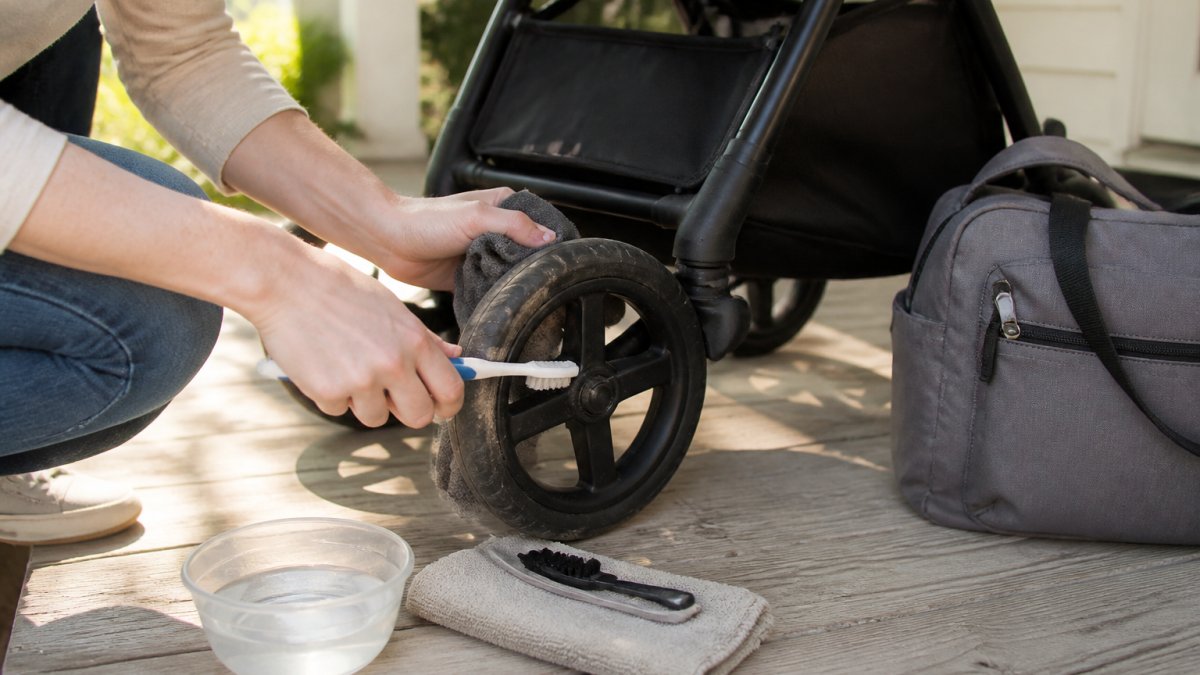
Removing Hair, Sand, and Fibers From Axles
Hair is the single most common cause of a sticky wheel, and it hides where you can't see it. Long strands wrap around the axle between the wheel hub and the fork, then compact into a hard ring that drags against the bearing. Sand behaves differently: it works into the swivel mechanism and grinds the plastic collar. Remove the wheel from the fork when you can, then cut the hair away with small scissors rather than pulling, since pulling can damage the bearing seal.
How to Fix a Squeaky Stroller Wheel and Sticky Swivel
Squeaks and sticky swivels are the two most common complaints, and they have different causes. Work through this sequence before you buy any parts, because most squeaks resolve with cleaning and a thin film of lubricant, and most sticky swivels resolve with debris removal rather than replacement.
Step 1: Isolate the noise. Lift the stroller so the wheels hang free and spin each one by hand.
Step 2: Clean before you lubricate. Lubricant applied over grit turns into grinding paste.
Step 3: Test the bearing by hand. With the wheel off the stroller, hold the axle and spin the wheel.
Step 5: Diagnose a sticky swivel. After cleaning, spin the swivel by hand through its full range.
Pro Tip
Fix one wheel at a time and keep the removed parts in a small tray. Stroller axles often use a specific washer or spacer order, and losing one turns a ten-minute job into a parts order.
If cleaning and lubrication do not silence the squeak, and the bearing shows no play, check the brake. A brake arm that drags lightly on the wheel hub produces a rhythmic squeak that sounds like a bearing fault but disappears when the brake is fully released.
Stroller Wheel Troubleshooting by Symptom
Match the symptom to the likely cause before you take anything apart:
| Symptom | Likely Cause | First Fix | When to Replace |
|---|---|---|---|
| Squeaking | Dry axle or bearing | Clean and lubricate | Bearing grinds after lubing |
| Sticky swivel | Debris in swivel housing | Clear and test rotation | Fork is bent |
| Wobble | Loose axle nut or worn bearing | Tighten and check bearing | Bearing has play |
| Flat tire | Puncture or failed valve | Patch inner tube | Tire sidewall is torn |
| Pulling to one side | Misaligned or unevenly worn wheel | Check alignment and tire pressure | Wheel is cracked |
Wobbly, Loose, or Misaligned Wheels
A wobbling wheel is a safety issue, not just an annoyance. Check the axle nut first, since vibration loosens it over time. If tightening doesn't fix the wobble, the bearing is likely worn and needs replacement. Misalignment shows up as the stroller pulling to one side; compare tire pressure across wheels before assuming a structural problem, because uneven inflation mimics misalignment on pneumatic tires.
Stroller Wheel Replacement: Tires, Tubes, and Whole Assemblies
Before you order a part, identify what you are actually replacing. The single biggest reason a stroller wheel repair fails is a mismatched part: a tube that is the wrong diameter, a tire that does not seat on the rim, or a wheel assembly whose axle diameter does not fit the fork. This section walks through identification first, then the replacement hierarchy.
Identify Your Tire Type First
- Pneumatic (air-filled) tires have a valve stem and a separate inner tube inside the tire. You can patch or replace the tube. Check the sidewall for a pressure rating in psi and inflate only to that number.
- Foam-filled tires look like pneumatic tires but have no valve stem and no tube. A cut or chunk missing from the tread usually means replacing the whole wheel assembly, because the foam core cannot be patched.
- Solid EVA or plastic wheels have no tire or tube at all. They wear flat spots on pavement and are replaced as a complete wheel, not repaired.
Look for a size marking molded into the tire sidewall, typically a diameter and width such as 12 1/2 x 2 1/4. Write that number down before you search for parts; it is the specification that matters, not the stroller model name alone.
The Replacement Hierarchy
Work from cheapest and least invasive to most:
- Patch the inner tube. For a puncture, remove the wheel, deflate fully, pry the tire off the rim with tire levers, locate the puncture by inflating the tube slightly and listening or feeling for air, then apply a patch or replace the tube. Reseat the tire, inflate to the sidewall pressure, and check that the tire bead sits evenly around the rim before reinstalling.
- Replace the inner tube. If the tube has multiple punctures, a failed valve, or a tear at the valve stem, a new tube is more reliable than a patch. Match the tube to the tire size marking and the valve type (Schrader or Presta).
- Replace the tire. Replace the tire when the tread is worn through, the sidewall is torn, or the bead will not seat. A tire that blows off the rim under pressure is a stop-use condition.
- Replace the wheel assembly. Replace the whole wheel when the rim is cracked, the hub is deformed, the bearing housing has failed, or the axle is bent. Most strollers sold as premium models use replaceable wheel assemblies precisely so you do not have to discard the frame.
Check Compatibility and Warranty Before Ordering
Parts are not universal across brands or even across model years. Before you buy, confirm the axle diameter, the fork width, and the wheel diameter against your stroller's manual or the manufacturer's parts page. A wheel that fits the fork but has a different axle diameter will wobble no matter how tight you make the nut. Also check the warranty terms: many manufacturers void wheel coverage if a wheel is removed incorrectly or if non-approved parts are used, and some require repairs through an authorized service center.
Watch Out
If a wheel detaches under load, or a tire blows off the rim after inflation, stop using the stroller until the assembly is replaced. Those are structural failures, not maintenance issues.
If you are weighing parts against a new purchase, our guide on why premium strollers hold up better explains what separates a repairable build from a disposable one.
Safety Checks and When to Stop Using a Damaged Stroller
Some damage is cosmetic and some is a stop-use signal. Retire the stroller, or at least that wheel, if you find any of the following:
- A cracked rim or fractured wheel hub
- A bent axle that won't straighten
- A brake that no longer engages the wheel
The Consumer Product Safety Commission publishes recall notices and safety guidance for juvenile products, and it's worth checking your model against current recalls before you invest in repairs. Our roundup of the best durable baby strollers covers models built for long service life, and our guide to choosing safe baby gear walks through what to check on any product before you rely on it.
A Preventive Maintenance Schedule That Fits Real Life
Consistency beats intensity here. A quick monthly maintenance routine prevents nearly every problem in this guide:
- Weekly: Wipe down wheels, check tire pressure on air tires, and spin each wheel by hand.
- Monthly: Deep clean axles and swivel housings, inspect for hair and fiber buildup, and check axle nuts for tightness.
- Seasonally: Lubricate bearings, inspect tires for cracking or embedded debris, and test the wheel-locking mechanism.
If you want a stroller that holds up to this kind of regular upkeep, our guide on how to choose a stroller for long-term use covers the build details that matter.
Tools, Supplies, and Warranty Considerations
You don't need a workshop. A basic kit covers almost every repair:
- Soft-bristle brush and mild soap
- Tweezers and small scissors
- Tire levers and a patch kit
Before you touch anything, read the warranty. Many manufacturers void coverage if a wheel is removed incorrectly or if non-approved parts are used, and some specify that repairs must go through an authorized service center. Keep your receipt and check the manual's maintenance section, since documented care often supports a warranty claim rather than undermining it.
Frequently Asked Questions
How do you clean stroller wheels?
Start by removing the wheel if your model allows it, then brush off loose dirt, sand, and debris with a dry soft brush. Wipe the rim and tire with a damp cloth and mild soap, and use tweezers or a small pick to pull hair and fibers out of the axle. Rinse the cloth rather than running water directly on bearings, dry everything fully, and reattach the wheel. Clean wheels spin more freely and last longer, especially after beach or trail walks.
What lubricant is safe to use on stroller wheels?
Use a silicone-based lubricant or a dry PTFE spray on axles and swivel mechanisms. These attract less dust than general-purpose oils and will not degrade most plastic and rubber parts. Apply a small amount, spin the wheel to spread it, and wipe away excess so grit does not stick. Avoid cooking oils, WD-40 as a long-term lubricant, and thick grease, which collect sand and hair and can make a squeaky stroller wheel worse over time.
Why is my stroller wheel wobbling or sticking?
Wobble usually means a loose axle nut, a worn bearing, or a bent wheel fork, while sticking often comes from hair wrapped around the axle, a swivel mechanism packed with grit, or underinflated tires. Check the axle nut first, then inspect for debris and test the swivel lock. If the wheel still wobbles after tightening, the bearing or wheel assembly likely needs replacement. Stroller wheel troubleshooting always starts with a clean, dry inspection.
When should a stroller wheel be replaced instead of repaired?
Replace the wheel when the tire has a sidewall tear, the rim is cracked or bent, the bearing is seized after cleaning and lubrication, or the axle mount is damaged. Punctures and worn tread are usually fixable with a patch kit or a new tire. Because stroller wheel repair only works on sound parts, any crack in a load-bearing component is a replacement, not a repair. Check your warranty before buying parts.
Can you use a stroller if one of its wheels is damaged?
No. A stroller with a cracked wheel, bent axle, or failed brake should stay parked until it is repaired or the part is replaced. A damaged wheel can cause the stroller to tip, especially on curbs, slopes, or uneven pavement, and a brake that does not hold is a serious risk. If you cannot confirm the wheel is secure and the brake engages, stop using the stroller and contact the manufacturer or the retailer for replacement parts.
How often should you maintain stroller wheels?
Do a quick clean and visual inspection monthly, and a fuller service every three months with lubrication of axles and swivel points. After beach, trail, or winter salt exposure, clean and dry the wheels the same day. If you walk daily on pavement, check tire pressure weekly and look for embedded glass or stones. A simple monthly maintenance routine prevents most squeaks, wobbles, and stuck swivel wheels before they start.
Wheel problems rarely resolve themselves, and a small squeak today becomes a seized bearing next month. Modocam Kids curates premium strollers and baby essentials built for the long haul, with the comfort, care, and style growing families actually need. Browse our stroller collection, check the safety details on every product page, and add to cart with confidence. Get started with Modocam Kids and keep your family rolling smoothly for years.


