

Cart
0

Last Updated: October 23, 2026
Quick Summary
To prevent gas in bottle-fed babies, hold your baby semi-upright at roughly a 45-degree angle and tilt the bottle so the nipple stays completely full of milk. Match the nipple flow to your baby's suck, and burp at the start, middle, and end of every feed.
- Flip the bottle upside down for two seconds: steady dripping means the flow is too fast.
- Burp every 2 to 3 ounces, or about every 5 minutes for a paced feed.
- Keep baby upright for 10 to 15 minutes after a feed before laying them down.
- Never enlarge a nipple hole yourself, as it delivers unpredictable flow and is a choking risk.
- Babies under about 3 months usually need burping at every pause as coordination develops.
Table of Contents
- Why Bottle-Fed Babies Swallow Air (and How to Spot It)
- The Best Bottle Position to Reduce Gas
- Baby Bottle Nipple Flow for Gas: Choosing the Right Speed
- How to Burp a Bottle-Fed Baby: Positions and Timing
- Gas Drops for Babies: What Parents Should Know
- Everyday Habits That Help Prevent Gas in Bottle-Fed Babies
- When Gas Is More Than Gas: Reflux, Allergy, and Red Flags
- Conclusion
- Frequently Asked Questions
Why Bottle-Fed Babies Swallow Air (and How to Spot It)
Bottle-fed babies swallow air because milk flows faster than they can swallow comfortably, and any gap between the nipple and their lips lets air slip in alongside the milk.
We hear from parents every week who are convinced their baby has a digestive problem when the real issue is feeding mechanics.
Here is what usually causes swallowed air:
- A nipple flow that is too fast, so baby gulps to keep up
- A nipple that is too slow, so baby sucks hard and takes in air
- The bottle held flat, leaving the nipple only half full of milk
Signs your baby is taking in air include pulling off the bottle and crying mid-feed, a hard or distended belly, lots of squirming, and wet burps.
Pro Tip
Flip the bottle upside down for two seconds before a feed. If milk drips out steadily without any sucking, the flow is too fast. If nothing moves when you squeeze gently, it is too slow.
The Best Bottle Position to Reduce Gas
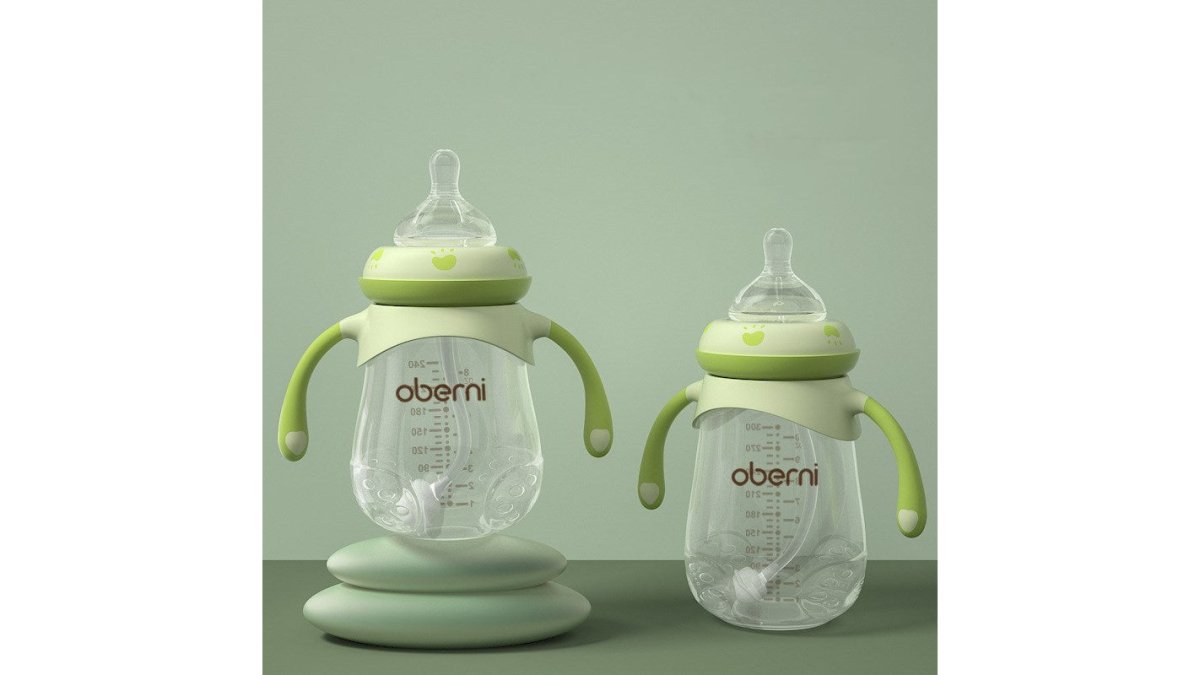
The best bottle position to reduce gas is a semi-upright hold, with baby's head higher than the stomach and the bottle tilted so the nipple stays completely full of milk. If you want a bottle built to cut down on swallowed air, see our wide-caliber anti-colic bottle.

Here is how to set it up:
- Sit baby up at roughly a 45-degree angle, supported along their back and head
- Tilt the bottle so milk fills the nipple at all times, usually around 30 to 45 degrees
- Keep the bottle level with baby's mouth, never propped or resting on a pillow
Step-by-Step: The Air-Free Bottle-Feeding Technique
This is a routine that takes about a minute to learn:
- Wash your hands and settle into a quiet spot with baby upright in your arm.
- Fill the nipple by tilting the bottle before it goes near baby's mouth.
- Brush the nipple against baby's upper lip and wait for a wide, open mouth.
- Bring baby to the bottle, not the bottle to baby, so the latch is deep.
- Pause every few minutes to check the nipple is still full and baby is breathing calmly.
- Burp at natural breaks rather than waiting for the end of the bottle.
- Stop when baby slows down, even if milk remains. Pushing the last ounce is a common gas trigger.
If your baby is over six months and feeding independently, a wide-caliber anti-colic bottle with a handle like our Wide Caliber Baby Milk Anti-Colic bottle is designed to cut down on swallowed air while giving little hands something to grip.
Baby Bottle Nipple Flow for Gas: Choosing the Right Speed
Nipple flow rate is the most overlooked cause of gas in bottle-fed babies. A flow that does not match your baby's suck makes them gulp or overwork, and both pull in air.
Use this as a starting point, then adjust to your baby:
- Slow flow: newborns and any baby who gulps, coughs, or leaks milk
- Medium flow: babies who finish a bottle calmly in 15 to 20 minutes
- Fast flow: older babies who get frustrated and fuss at a slower nipple
Watch for the two warning signs. Milk running down the chin means the flow is too fast. For a fuller walkthrough of bottle and nipple sizing, our guide on how to choose baby feeding bottles covers the details.
Watch Out
Never enlarge a nipple hole yourself. A stretched or cut nipple delivers an unpredictable flow and can come apart in baby's mouth, which is a choking risk.
How to Burp a Bottle-Fed Baby: Positions and Timing
How to burp a bottle-fed baby well comes down to timing: burp at the start, the middle, and the end of every feed. Waiting until the bottle is empty leaves a full belly of trapped air and a much harder burp.
A practical rhythm most practitioners suggest:
- Before the feed: a brief upright burp attempt after the first ounce or two, especially for newborns who gulp.
- Mid-feed: pause every 2 to 3 ounces, or about every 5 minutes for a paced feed, and try a burp.
- End of feed: burp again, then keep baby upright for 10 to 15 minutes before laying them down.
Three positions work for most babies:
- Over the shoulder: baby upright against your chest, chin clear of your shoulder, gentle pats or upward strokes on the back.
- Sitting on your lap: baby leaning slightly forward with the heel of your hand supporting the chin and chest, not the throat, and the other hand rubbing the back.
- Face down across your lap: baby's head slightly higher than the chest, slow circular rubs, never patting hard over the spine.
Give each position a minute or two before switching. Not every feed produces a burp, and that is normal. If baby settles happily, stop trying.
What to do when baby won't burp
Some babies swallow very little air and simply do not need to burp. If baby is calm, not squirming, and not arching, you can stop after a couple of minutes and keep them upright instead. If baby is fussy and no burp comes, try a change of position, a gentle bicycle-leg movement, or a short upright cuddle before returning to the bottle.
Age matters for burping
Newborns and babies under about 3 months usually need burping at every pause because their suck-swallow coordination is still developing. From roughly 4 to 6 months, many babies burp more easily and need fewer interruptions. Once baby sits independently and eats solids, burping often becomes optional unless they seem uncomfortable. Follow your baby's cues rather than a fixed schedule.
Wide Caliber Baby Milk Anti-Colic, Baby Bottle Anti-Fall →
Pro Tip
If your baby falls asleep mid-feed, a gentle upright hold for a few minutes often brings up trapped air without waking them fully. Avoid vigorous patting on a sleeping baby.
Watch Out
Never leave a baby propped on a pillow or in a car seat to "burp themselves." Positional reflux gear is not a substitute for an upright, supervised burp hold, and babies should not be left unattended during or right after a feed.
A simple burping rhythm keeps trapped air from building up over a feed.
| When | What to do |
|---|---|
| Before the feed | Brief upright burp attempt after the first ounce or two |
| Mid-feed | Pause every 2 to 3 ounces, or about every 5 minutes |
| End of feed | Burp again, then keep baby upright for 10 to 15 minutes |
| Position: over the shoulder | Baby upright against your chest, gentle pats or upward strokes |
| Position: sitting on your lap | Baby leaning slightly forward, heel of hand supporting chin and chest |
| Position: face down across your lap | Head slightly higher than chest, slow circular rubs |
Gas Drops for Babies: What Parents Should Know
Gas drops for babies are sold as simethicone drops, which work by joining small gas bubbles into larger ones that are easier to pass. They are widely used and generally considered low risk, but they treat the symptom, not the cause.
Our honest take: drops are a backup, not a strategy. If you are reaching for them after every feed, the bottle position or nipple flow needs attention first.
What simethicone does and does not do
Simethicone is not absorbed into the bloodstream; it acts in the gut to reduce surface tension between gas bubbles. That means it may help a baby pass trapped air more comfortably, but it will not fix the air being swallowed in the first place. It also will not treat reflux, milk protein allergy, or an illness, which is why persistent symptoms need a pediatrician's review rather than another dose.
A few practical points:
- Follow the dosing on the package and check with your pediatrician first, especially for newborns and premature babies.
- Do not combine drops with other remedies without asking your doctor, since some products overlap in ingredients.
- Give drops directly or in a small amount of milk as the label directs, not in a full bottle unless your pediatrician advises it.
Gripe water and herbal remedies
Gripe water and herbal supplements are not regulated the same way as medicines, so treat claims with caution. Formulas vary widely, some contain alcohol or sodium bicarbonate, and evidence for effectiveness is limited. The American Academy of Pediatrics has cautioned against giving gripe water to infants, particularly for babies under 1 month, because of choking risk, contamination concerns, and unproven benefit.
Other home remedies, ranked by risk
- Low risk: upright holding, bicycle legs, tummy massage, and a warm bath.
- Use with guidance: probiotic drops, which some pediatricians recommend for colic-like fussiness but which are not a proven gas cure.
- Avoid without medical advice: essential oils, teas, and any remedy marketed with strong claims and no ingredient transparency.
Key Takeaway
Gas drops can be a reasonable occasional tool, but they are not a fix for feeding mechanics. If you are using them daily, revisit bottle angle, nipple flow, and burping first, and talk to your pediatrician about persistent symptoms.
Watch Out
Never give a baby under 1 month gripe water or herbal remedies without explicit pediatrician approval. Choking, contamination, and ingredient safety are real concerns at this age.
Everyday Habits That Help Prevent Gas in Bottle-Fed Babies
Small daily habits do most of the work when you want to prevent gas in bottle-fed babies. Prevention beats treatment every time.
Safe Formula Preparation and Bottle Handling
Mix formula exactly as the label directs, and never water it down or pack the scoop. A too-thick or too-thin mix can upset digestion. Shake gently and let the bubbles settle before feeding, because frothy milk carries extra air.
Wash bottles and nipples in hot soapy water after every use, and sterilize new nipples before the first feed. If you prefer glass, our Baby Glass Bottle is easy to clean and holds temperature well. If you prefer glass, our Baby Glass Bottle is easy to clean and holds temperature well. When you are out and about, a portable bottle warmer helps you bring milk to a comfortable temperature without a microwave.


Movement and Tummy Time for Gas Relief
Gentle movement shifts trapped air. Try these between feeds, not right after a full bottle:
- Bicycle legs: lay baby on their back and pedal their legs slowly
- Tummy time: supervised, on a firm surface, for short stretches
- Tummy massage: soft clockwise circles on the belly
When Gas Is More Than Gas: Reflux, Allergy, and Red Flags
Ordinary gas settles with burping and time. Reflux, milk allergy, or illness needs a doctor, and the signs are different.
Watch for these red flags and call your pediatrician:
- Forceful spitting up that shoots across the room
- Poor weight gain or refusing feeds
- Blood in the stool or persistent diarrhea
If you suspect reflux, our article on ergonomic bouncers for reflux explains how positioning gear can help between feeds. Always confirm with your doctor before changing formula.
Conclusion
Gas is one of the most common feeding frustrations parents face, and it rarely means something is wrong with your baby. Fix the angle, match the nipple flow, and burp on a schedule, and most of it fades.
Modocam Kids stocks the feeding essentials that make that routine easier, from anti-colic bottles to portable warmers, all chosen for comfort and care.
Frequently Asked Questions
How often should I burp a bottle-fed baby?
Burp your baby every 2 to 3 ounces, or whenever they pause, turn away, or start to fuss during a feed. For newborns, that might mean two or three burp breaks per bottle. Older babies who feed efficiently may need just one or two. Try upright over-the-shoulder, sitting on your lap, or face-down across your knees. If no burp comes after a minute or two, continue feeding and try again later. Consistent burp breaks are one of the simplest ways to prevent gas in bottle-fed babies.
Can a bottle or nipple cause gas in my baby?
Yes. A nipple flow that is too fast lets milk pour out faster than your baby can swallow, so they gulp air trying to keep up. A flow that is too slow makes them suck hard and swallow air in the process. A nipple that collapses or isn't fully filled with milk also lets air in. Choosing a slow-flow nipple, keeping the nipple full, and using an anti-colic bottle with a venting system can all reduce swallowed air. If your baby is consistently gassy, check the nipple flow first.
Do gas drops help bottle-fed babies?
Simethicone-based gas drops are generally considered safe and may help some babies by combining small gas bubbles in the stomach. They do not work for every baby, and they won't fix gas caused by feeding technique. Before trying gas drops, review bottle position, nipple flow, and burping. Always follow the dosing on the label and check with your pediatrician, especially for newborns or babies with other health conditions. Gas drops are a supplement to good feeding technique, not a replacement.
When should I call the pediatrician about a gassy baby?
Call your pediatrician if gas comes with vomiting (especially green or bloody), poor weight gain, blood in the stool, a firm or swollen belly, fever, or inconsolable crying that lasts for hours. Also reach out if your baby refuses feeds, has trouble breathing during feeding, or seems lethargic. Ordinary gas causes fussiness but not these signs. Reflux, milk protein allergy, or illness can look like gas at first, so trust your instincts and call if something feels off.


