

Cart
0

Table of Contents
- Understand Core Safety Standards for Baby Products
- How to Check for Baby Product Recalls Before Buying
- Evaluate Non-Toxic Baby Gear: Materials That Matter
- Best Practices for Buying Used Baby Gear
- Essential vs. Nice-to-Have: What Your Baby Actually Needs
- Create a Safe Sleep Environment and Prevent Hazards
- Maintenance and Lifecycle Safety Checks
- Frequently Asked Questions
Last Updated: September 25, 2026
Understand Core Safety Standards for Baby Products
The Consumer Product Safety Commission (CPSC) sets mandatory safety standards for nearly all baby products sold in the United States. These standards exist because babies are uniquely vulnerable to hazards like suffocation, entrapment, and chemical exposure that older children can better withstand.
CPSC requirements include stability testing, weight limits, and structural integrity checks. Crib mattresses must fit within specific dimensions to prevent entrapment, strollers must pass tip-over tests, and clothing must meet flame retardant standards.
"CPSC-compliant" is the minimum bar, not the ceiling. Many brands go beyond baseline compliance by sourcing materials that exceed regulatory thresholds or implementing additional safety checks throughout their supply chain.
Pro Tip
Check the product label or manufacturer's website for CPSC compliance statements. Legitimate retailers should clearly display safety certifications and testing documentation. If a seller cannot provide this information, that's a red flag.
How to Check for Baby Product Recalls Before Buying
Product recalls happen regularly. The CPSC maintains a searchable database of all active recalls on SaferProducts.gov, and checking it before purchase is one of the most important steps you can take when learning how to choose safe baby gear.
Search the product name and model number on the CPSC website before purchase. Recalls often apply to certain batches or production years, not entire product lines. If you're buying used gear, this step becomes even more critical because you may not have original packaging or documentation.
Set up email alerts for product categories you own through the CPSC. This ongoing monitoring catches safety issues that emerge after initial sale, which is crucial for items like baby monitors or feeding equipment that may develop defects over time.
When a recall occurs, don't assume the retailer will contact you automatically. Register your products when you buy them through the brand's website or receipt to ensure you're in the notification loop. For secondhand purchases, this becomes impossible, which is why buying used baby gear requires extra diligence.
Watch Out
Never ignore a recall notice, even if the product seems to be working fine. Recalls are issued because actual injuries or deaths have occurred. The hazard may not be obvious until the product fails in a specific way.
Evaluate Non-Toxic Baby Gear: Materials That Matter
The materials touching your baby's skin and going into their mouth matter more than almost any other product attribute. Babies have thinner skin and developing immune systems, so they absorb chemicals more readily than older children or adults. When you choose safe baby gear, you're making decisions about chemical exposure that accumulate over time.
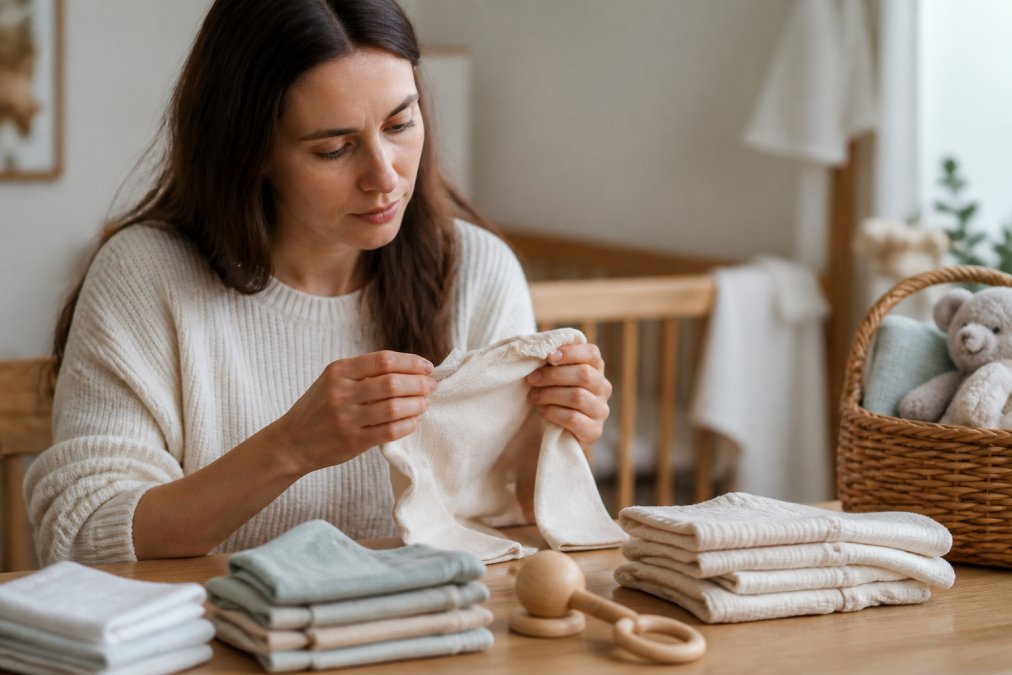
Organic cotton is grown without synthetic pesticides or fertilizers. Food-grade silicone in teethers, pacifiers, and bottle nipples doesn't leach chemicals when heated or chewed. Natural rubber, wool, and linen avoid synthetic dyes and chemical treatments. Materials with fewer chemical inputs mean fewer chemicals that can migrate to your baby.
Flame retardants are legally required in many baby products but controversial. Manufacturers must meet CPSC flammability standards; some use chemical flame retardants while others use tighter weaves or inherently fire-resistant fabrics. If flame retardant chemicals concern you, look for products that explicitly state how they meet safety standards.
Identifying Harmful Chemicals and Flame Retardants
Common chemicals in baby products include phthalates (used in plastics to increase flexibility), BPA (found in hard plastics), and brominated flame retardants (added to fabrics and foam). These substances don't always appear on product labels. Phthalates may not be listed at all; they're simply part of the plastic formulation. BPA is increasingly phased out but still appears in some products.
Read product descriptions and material lists. If a product says "phthalate-free" or "BPA-free," that's a positive signal. For products like crib mattresses or changing pads where foam is involved, ask whether flame retardants are chemical-based or achieved through fabric construction.
Certifications That Prove Safety
Third-party certifications mean an independent organization tested the product against specific standards. GOTS (Global Organic Textile Standard) ensures organic materials are genuinely organic and produced without harmful chemicals. Greenguard Gold indicates low chemical emissions. OEKO-TEX Standard 100 means textiles have been tested for harmful substances. These certifications signal genuine commitment to safety beyond minimum legal requirements.
These certifications matter especially for items where chemical exposure is a concern: mattresses, crib sheets, and clothing that touches skin daily. Modocam Kids curates products with attention to safety standards, making it easier to find gear that meets higher safety standards.
Key Takeaway
Certifications matter, but they're not a guarantee of perfection. A product without certification may still be safe; a certified product may still have drawbacks. Use certifications as one data point among several when evaluating options.
Best Practices for Buying Used Baby Gear
Used baby gear can offer significant savings but requires a different evaluation approach. When you buy secondhand, you lose the manufacturer's warranty and original documentation. This doesn't mean used gear is unsafe, but it does mean you need to be more thorough in your assessment.
Check the CPSC recall database for the specific model and production year. Ask the seller directly whether they've ever received recall notices. Request photos from multiple angles, including labels, serial numbers, or manufacturing dates.
3.2 Inch Digital Baby Care Device →
Inspect the item in person when possible. Look for cracks, tears, missing parts, and heavy wear. For strollers or car seats, test all locking mechanisms and latches. Never buy a used car seat unless you can verify its complete history and confirm it hasn't been in an accident.
For soft goods like mattresses, bedding, or clothing, wash everything thoroughly before use. Check seams for damage and ensure no parts are missing. For feeding equipment like bottles or sterilizers, verify that all components are present and functional. Modocam Kids offers new gear, but if you're supplementing with used items, these checks protect your investment and your baby's safety.
Essential vs. Nice-to-Have: What Your Baby Actually Needs
New parents face overwhelming product choices, and retailers profit from this confusion by marketing "essentials" that aren't actually essential. The core items every baby needs are straightforward: a safe sleep space, clothing, diapers, feeding supplies, and a way to transport them. Everything else is either a convenience that makes parenting easier or a luxury that enhances lifestyle.
A safe sleep environment means a crib, bassinet, or play yard that meets CPSC standards, not a co-sleeper that costs three times as much. Appropriate clothing means onesies, sleepers, and weather-appropriate layers, not boutique brands or character-themed outfits. Feeding supplies means bottles or nursing equipment and age-appropriate foods, not specialized warming systems or designer high chairs. When you strip away marketing, the essentials list gets short fast.
Nice-to-have items include things like baby monitors with video capability, sound machines, blackout curtains, and specialized storage solutions. These genuinely do improve daily life for many families. A digital baby monitor with temperature display, like the 3.2 Inch Digital Baby Care Device available at Modocam Kids, offers two-way intercom and automatic night vision for around $49.59, a convenience that many parents find worthwhile. But it's not required for your baby's safety or development.

The distinction matters because it shapes your budget and decision-making. Spend on essentials that directly affect safety and health. Spend on nice-to-haves only after you've covered the basics and only if the item genuinely solves a problem you're experiencing. This approach prevents the common trap of accumulating products you don't use while missing items that would actually help.
Create a Safe Sleep Environment and Prevent Hazards
A safe sleep space is the single most important piece of baby gear you'll buy. The CPSC and pediatric organizations have clear guidelines: babies should sleep on a firm, flat surface in a safety-approved crib, bassinet, or play yard. The mattress should fit snugly with no gaps. The sleep space should be bare except for a fitted sheet, no pillows, blankets, bumpers, or soft toys.
These guidelines exist because of suffocation risks and entrapment hazards. Soft objects can obstruct airways. Gaps between mattress and crib rails can trap limbs or a baby's head. Bumper pads, despite their popularity, actually increase risk rather than prevent injury. The safest sleep environment is the simplest one.
Room-sharing without bed-sharing, where your baby sleeps in their own crib in your bedroom, is recommended for at least the first six months, ideally the first year. This reduces the risk of sudden infant death syndrome (SIDS) while keeping your baby close for nighttime feeding and monitoring. A monitor helps you observe your baby without entering the room unnecessarily. Temperature control matters too; babies sleep best in cool rooms around 68-72 degrees Fahrenheit.
Install safety gates at stairs and secure heavy furniture to walls to prevent tip-over accidents as your baby grows and becomes mobile.
Pro Tip
Babies don't need a perfectly decorated nursery. They need a safe, comfortable space. Invest in a quality crib and mattress; skip the expensive bedding sets and wall decor. Your baby won't remember the aesthetic, but they will benefit from the safety.
Maintenance and Lifecycle Safety Checks
Safety doesn't end at purchase. Gear degrades over time, and maintenance directly affects whether products remain safe as your baby grows and uses them more intensively. Regular inspection catches problems before they become hazards.
Frequently Asked Questions
What safety certifications should I look for when choosing safe baby gear?
Look for CPSC (Consumer Product Safety Commission) compliance, ASTM International standards, and Greenguard Gold certification. Cribs and car seats must meet specific federal standards. Check product labels for these marks before purchase. Many retailers highlight certified products to help you make informed decisions quickly.
How do I check for baby product recalls before buying?
Visit the CPSC website (cpsc.gov) and search the SaferProducts database by product name or manufacturer. Sign up for CPSC recall alerts via email. Check the product's serial number against any active recalls. Always verify the manufacturing date on packaging. This step takes minutes but protects your child from known hazards and defective items.
Are second-hand baby products safe to use?
Some used gear is safe; others carry risks. Never buy recalled items, damaged car seats, or cribs with missing hardware. Check structural integrity, test locking mechanisms, and verify all parts are present. Soft goods like blankets and clothing are generally safer used than hard goods. Always research the product's safety history before purchasing secondhand.
What materials should I avoid in baby clothing and gear?
Avoid products with flame retardants, PVC, BPA, and phthalates. Choose organic cotton, food-grade silicone, and non-toxic dyes instead. Check product labels for certifications like Oeko-Tex or Greenguard Gold. Many premium retailers now list material compositions upfront, making it easier to identify safe options for your baby's sensitive skin.

