

Cart
0

Table of Contents
- Start With the Safety Basics: What Makes a Baby Car Seat Safe
- Types of Car Seats for Newborns: Infant, Convertible, and All-in-One
- Why a Rear-Facing Car Seat for Newborns Is Non-Negotiable
- Car Seat Installation for Newborns: Seat Belt, LATCH, and Base Options
- How to Check Car Seat Fit: Harness, Chest Clip, and Angle
- Used Car Seat Safety: When to Walk Away
- Your Newborn Car Seat Checklist Before You Buy
- Conclusion
- Frequently Asked Questions
Last Updated: October 19, 2026
Start With the Safety Basics: What Makes a Baby Car Seat Safe
A safe baby car seat is one that meets federal safety standards, fits your newborn correctly, and installs tightly in your vehicle every single time. At Modocam Kids, we tell parents the same thing: the safest seat is not the most expensive one. It is the one that fits your child and your car.
Newborns need more protection than older kids. Their necks are weak and their heads are large compared with their bodies. That is why the right seat, used the right way, matters so much in those first months.
Federal Safety Standards and Labels to Look For
Every car seat sold in the United States must meet Federal Motor Vehicle Safety Standard 213. You can confirm this by checking the NHTSA car seat safety standards guidance and the label on the seat itself.
Look for these on the seat and its manual:
- A label stating it meets FMVSS 213
- The manufacture date and an expiration date
- Weight and height limits for rear-facing use
- Clear installation instructions in English
If a seat has no label, no manual, or no visible expiration date, walk away.
Five-Point Harness and Side-Impact Protection
A five-point harness secures your baby at both shoulders, both hips, and the crotch. It spreads crash forces across the strongest parts of a small body. Never settle for a three-point harness for a newborn.
Side-impact protection matters too. Look for a seat with a deep shell and energy-absorbing foam around the head and torso. These features help in side collisions, which are common at intersections.
Pro Tip
Check the expiration date before anything else. Car seats expire because plastic weakens over time and standards change. A seat past its date offers no guaranteed protection, no matter how good it looks.
Types of Car Seats for Newborns: Infant, Convertible, and All-in-One
Three main types of baby car seats work for newborns, and each fits a different budget and family. Here is how they compare.
| Type | Best For | Rear-Facing Limit | Key Trade-Off |
|---|---|---|---|
| Infant seat | New parents who want a carry handle | Usually around 30-35 lb | Outgrown fastest |
| Convertible seat | Families who want one seat to last years | Often 40-50 lb rear-facing | Stays in the car |
| All-in-one seat | Long-term value from birth to booster | Varies by model | Bulkier and heavier |
Infant car seats come with a base and a carry handle. You can click the seat out of the car without waking your baby. They fit small newborns well, but most are outgrown within a year or so.
Convertible car seats stay installed in the car and switch from rear-facing to forward-facing as your child grows. They often last several years, which makes them a strong value pick.
All-in-one seats go from rear-facing to forward-facing to booster. They save money over time but tend to be large and heavy.
Best For
Families planning more than one child or wanting a seat that lasts from birth through the preschool years should start with a convertible seat.
Why a Rear-Facing Car Seat for Newborns Is Non-Negotiable
A rear-facing car seat for a newborn is the only safe choice for the first year and beyond. In a crash, the seat shell cradles the baby's head, neck, and spine and spreads the force across the whole back. A forward-facing seat puts that force on a neck that cannot handle it yet.
The NHTSA rear-facing recommendations are clear: keep your child rear-facing as long as the seat allows. Many seats now support rear-facing use well past the first birthday.
Parents often ask when to switch. The answer is simple: not until your child reaches the top weight or height limit for rear-facing on that specific seat. Check the manual, not the calendar.
Rear-facing also reclines your baby at a safe angle, which helps keep the airway open. That angle matters more than most parents realize.
Car Seat Installation for Newborns: Seat Belt, LATCH, and Base Options
Car seat installation for a newborn comes down to one rule: the seat must not move more than one inch at the belt path. You can install with the vehicle seat belt, with the LATCH system, or with a base, and all three work if done correctly.
A few practical points:
- Use the seat belt or LATCH, not both, unless the manual says otherwise
- Route the belt or strap through the correct path, marked in blue or red on most seats
- Press your weight into the seat while tightening
- Check the manual for the recline angle your newborn needs
The base option is handy for infant seats. Install the base once, then click the seat in and out. Just confirm the base is tight before every trip.
The Inch Test and the Locked-Door Rule
The inch test is simple. Grab the seat at the belt path and tug. If it moves more than one inch side to side or front to back, it is too loose. Tighten and try again.
The locked-door rule is about the handle. On infant seats, the carry handle must be in the position the manual requires while driving. Many seats require it down or locked upright. Check your manual and follow it exactly.
Watch Out
A loose seat is one of the most common installation mistakes. A seat that shifts more than an inch can let your baby move too far in a crash, which raises the risk of injury. Recheck the inch test every time you reinstall the seat.
How to Check Car Seat Fit: Harness, Chest Clip, and Angle
Knowing how to check car seat fit takes about a minute, and you should do it every trip. Snug harness, chest clip at armpit level, and the right recline angle are the three things to confirm.
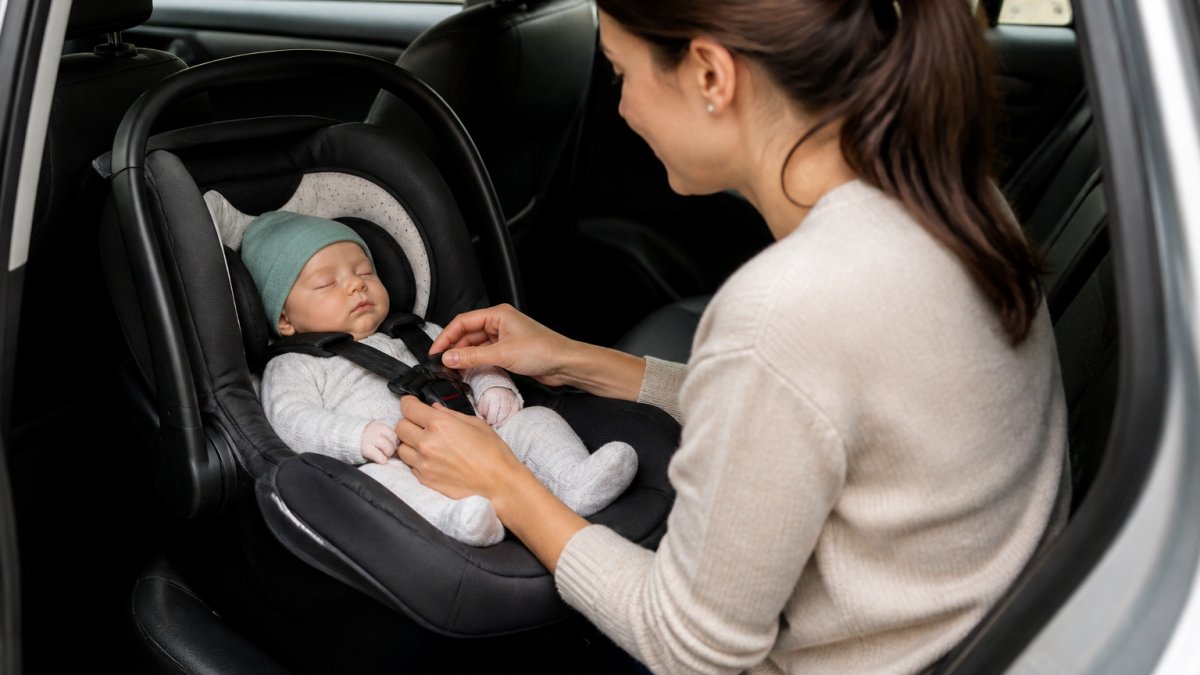
Run through this quick check:
- Harness straps: snug enough that you cannot pinch a fold at the shoulder
- Chest clip: level with the armpits, never on the belly or neck
- Straps: flat, not twisted, and threaded through the correct slots
- Recline angle: follow the seat's angle indicator for a newborn
- Clothing: nothing bulky under the harness, since it hides slack
The pinch test is the easiest way to check strap tightness. Pinch the strap at the shoulder. If you can grab a fold, tighten it.
Angle matters for newborns because they cannot hold their heads up. Too upright, and the head can slump forward. Use the seat's built-in level indicator and adjust the base or a pool noodle under the seat as the manual allows.
Used Car Seat Safety: When to Walk Away
Used car seat safety is a gray area, and we lean cautious. A used seat can be safe, but only if you can confirm its full history. If you cannot, walk away.
Walk away when:
- The seat has been in any crash, even a minor one
- The expiration date has passed
- Labels or the manual are missing
- The harness, buckle, or shell is cracked or frayed
- The seller cannot confirm it was never checked as damaged
A seat that looks fine can still have hidden stress damage. The NHTSA used car seat guidance advises against used seats unless you know the history. Free or cheap is not worth the risk when a new seat is the safer bet.
Your Newborn Car Seat Checklist Before You Buy
Use this checklist before you add a seat to your cart. It covers the details that matter most.
- Meets FMVSS 213 and has all labels
- Fits your newborn's weight and height now
- Rear-facing for at least the first year
- Five-point harness with a chest clip
- Side-impact protection around the head
- Fits your vehicle's back seat and LATCH or belt setup
- Has a clear, current manual and expiration date
- Recline angle works for a newborn
- Easy to clean and adjust
At Modocam Kids, we curate baby gear with comfort and care in mind, so you can shop with confidence.
Conclusion
Choosing a safe baby car seat for a newborn comes down to fit, installation, and honest history. Get those right, and you have done the most important safety work a new parent can do.
Modocam Kids is here to make that easier. Our curated selection of baby essentials, our focus on comfort and care, and our one-stop shopping experience help you find gear you can trust.
Frequently Asked Questions
What type of car seat is safest for a newborn?
A rear-facing infant car seat or a rear-facing convertible seat is the safest choice for a newborn. Both keep your baby's head, neck, and spine supported in a crash. Infant seats are lightweight and click into a base, which makes them convenient for short trips. Convertible seats stay rear-facing longer and can save money over time. Whichever you pick, confirm it meets federal safety standards and fits your vehicle and your baby's weight and height limits.
How do I know if a car seat fits my newborn?
Check the harness first. Straps should sit snug against the body with no slack when you pinch them at the shoulder. The chest clip belongs at armpit level, and the harness slots should be at or below your baby's shoulders in a rear-facing seat. Your baby's head should stay at least one inch below the top of the seat shell. If the head is higher or the straps won't tighten properly, the seat is too small and it's time to move up.
Can I use a secondhand car seat for a newborn?
Only if you can verify the seat's history. Skip any car seat that has been in a crash, has visible cracks or stress marks, is missing the label with the model number and manufacture date, or has expired. Most seats expire six to ten years after the manufacture date, and plastic weakens over time. If you don't know the seat's full history or can't confirm it was never in a crash, buy new. The savings aren't worth the risk.
How do I install a newborn car seat correctly?
Read both the car seat manual and your vehicle owner's manual, since they cover different details. Use either the seat belt or LATCH, not both unless the manufacturer allows it. Tighten until the seat moves less than one inch side to side at the belt path. For rear-facing seats, confirm the angle indicator shows the correct recline so your baby's head doesn't flop forward. Many fire departments and safety organizations offer free checks by certified technicians if you want a second opinion.

