

Cart
0

Table of Contents
- What GOTS Certified Organic Cotton Actually Means
- The Certification Criteria: Fibre Content, Chemicals, and Labor
- Organic Cotton vs GOTS-Certified Cotton: What's the Difference?
- GOTS vs OEKO-TEX: How the Two Standards Differ
- How to Verify GOTS Certification Before You Buy
- Is GOTS-Certified Cotton Safe for Babies?
- What GOTS Certification Does Not Guarantee
- Conclusion
- Frequently Asked Questions
Last Updated: October 20, 2026
What GOTS Certified Organic Cotton Actually Means
GOTS certified organic cotton is cotton grown without synthetic pesticides or genetically modified seed, then processed under a strict set of environmental and labor rules that a third-party certifier inspects at every stage.
The longer answer to what is GOTS certified organic cotton matters when you're holding a onesie in a store, trying to work out whether the label means anything.
Organic describes how the cotton was grown; GOTS describes how it was grown and cleaned, dyed, finished, and sewn, and only the latter is independently checked from field to folded shirt.
The Global Organic Textile Standard in Plain Terms
The Global Organic Textile Standard is a voluntary, worldwide standard for organic fibre textiles, setting rules for fibre content, chemical inputs, wastewater, and worker conditions, audited by an accredited certification body at each facility in the chain.
Two things make it different from most eco-labels:
- It is chain of custody, not a single factory stamp. Every handler between the farm and the finished product needs certification.
- It is audited, not self-declared. A certifier inspects facilities and issues scope certificates with expiry dates you can check.
The Certification Criteria: Fibre Content, Chemicals, and Labor
GOTS certification rests on three pillars: what the fabric is made of, what goes onto it during processing, and who makes it. A product must clear all three to earn the label.
Organic Fibre Thresholds and Label Grades
The fibre rules cause most confusion. GOTS uses two label grades, differing by a single word on the packaging.
| Label Grade | Organic Fibre Minimum | What the Label Says | Typical Products |
|---|---|---|---|
| "Organic" | 95% | "GOTS organic" | Baby bodysuits, cotton sheets, towels |
| "Made with organic" | 70% | "Made with X% organic" | Blended knits, some outerwear |
| Below 70% | Not eligible | Cannot carry the GOTS label | n/a |
The leftover 5% in the "organic" grade is reserved for specific, rule-restricted non-organic fibres.
For parents, the practical takeaway is simple: "made with organic" is not the same as "organic." Both are legitimate GOTS claims. Only one means nearly all the fibre is organic.
Chemical Inputs, Wastewater, and Social Criteria
Processing is where conventional cotton gets dirty. GOTS bans a long list of hazardous chemicals from wet processing, certain dyes, heavy metals, formaldehyde-based finishes, covering dyeing, printing, and finishing.
The environmental requirements extend past the chemical list:
- Wastewater from wet processing must be treated before discharge
- Facilities must track water use and have a water management plan
- Waste management and energy use are reviewed during audits
Social criteria cover labor conditions at every certified facility, freedom of association, safe working conditions, limits on working hours, audited alongside environmental checks, not as a separate add-on.
Pro Tip
When you see a GOTS label, look for the license number printed near the logo. That number is the fastest way to confirm the claim is real, and it takes about two minutes to check. Most shoppers never look.
Organic Cotton vs GOTS-Certified Cotton: What's the Difference?
Organic cotton means the fibre was grown under organic farming rules: no synthetic pesticides, no GMOs, organic land management. GOTS-certified cotton means that fibre was also processed, dyed, and finished under full GOTS criteria and traced through a certified supply chain.
Organic cotton is an agricultural claim; what is GOTS certified organic cotton is an agricultural and manufacturing claim. A shirt can be organic cotton yet dyed with whatever a factory chooses, or carry no chain-of-custody paperwork at all.
GOTS vs OEKO-TEX: How the Two Standards Differ
GOTS and OEKO-TEX answer different questions. OEKO-TEX, through its STANDARD 100 program, asks whether the finished article is free from harmful substance levels that could affect health (OEKO-TEX® STANDARD 100).
| Question | GOTS | OEKO-TEX STANDARD 100 |
|---|---|---|
| Focus | Organic fibre plus processing and labor | Chemical safety of the finished item |
| Covers farming | Yes | No |
| Covers labor conditions | Yes | No |
| Chain of custody required | Yes, at every stage | Product-level testing |
| Typical use | Organic cotton clothing, sheets | Any textile, organic or not |
Neither is "better", many cotton sheets carry both. If your priority is organic fibre and responsible production, GOTS is the relevant standard; if it is testing for harmful residues in the finished item, OEKO-TEX speaks to that.
How to Verify GOTS Certification Before You Buy
Verification takes about two minutes. You need the license or certificate number printed on the GOTS label, and a browser.
- Find the license number on the label, usually next to the GOTS logo. It is a multi-digit number, not a batch code.
- Open the public GOTS database and search that number.
- Check the scope. The database lists which products and which supply-chain stages the certificate covers, for example, "knitted fabric" or "garment manufacturing."
- Check the expiry date. Certificates are time-limited and renewed after audit.
- Match the product. Confirm the item you are holding falls within the certified scope.
That last step is the one people skip. A facility can hold a valid scope certificate for knitted fabric while the finished garment was assembled outside the certified chain. The certificate is real; the product claim may not be.
Reading a Scope Certificate Like a Buyer
A GOTS scope certificate is not a single "yes", it has several fields, each answering a different question:
- Certified entity. The legal name of the company holding the certificate. If the brand on the hangtag is not the certified entity, it is likely sourcing from a certified supplier, allowed, but the brand should be able to name that supplier.
- Certification scope. The specific products and processing stages covered. "Trading," "dyeing," and "garment manufacturing" are each scopes; a trader can be certified without owning a single sewing machine.
- Standard version. Certificates reference the version they were audited against. An older-version certificate may still be valid until expiry, but the requirements it was checked against are not the current ones.
Certified Facility vs. Certified Product vs. Certified Brand
This distinction causes the most confusion:
Children's Wear Summer New Korean Children's Boys Cotton T-shirt Men's Treasure →
- A certified facility has passed an audit for the processes it performs. It does not mean every product that leaves that facility is certified, only the products within its certified scope, made with certified inputs, are.
- A certified product is one whose full chain of custody, from fibre to finished item, is covered by valid certificates and whose fibre content meets the label grade claimed.
- A certified brand is not a GOTS category. Brands are not certified as brands; they are certified as handlers (traders, manufacturers) or they sell products made by certified suppliers. A brand selling one GOTS product does not make its other products GOTS.
A common pattern: a factory holds a valid scope certificate, and a brand markets its entire line as "GOTS certified" because some products run through it. The certificate is genuine; the blanket claim is not.
Matching the Certified Entity to the Seller
Compare the certified entity name to the company you are buying from. If they differ, that is normal for a brand sourcing from certified suppliers, but it should be able to name that supplier and scope. If a seller cannot name the certified entity behind a product, treat the claim as unverified.
Watch Out
A common mistake is trusting a hangtag that says "organic" with no certification body named. Without a certifier and a number, there is nothing to check. Treat it as marketing copy, not a certification claim.
Is GOTS-Certified Cotton Safe for Babies?
GOTS-certified cotton is a reasonable choice for baby clothing because the standard restricts hazardous chemicals in processing and requires wastewater treatment.
Two things worth knowing:
- Chemical restrictions reduce exposure risk. The banned-substance list targets finishes and dyes that parents worry about most.
- Washing still matters. New garments carry sizing and handling residue, so a wash before first wear is standard practice.
For newborns, look for soft, breathable cotton and a simple construction with few tags or rough seams. Our newborn baby romper is made with cotton fabric and cut for warm-weather wear, and our long-sleeve baby jumpsuit is 99% cotton for cooler months.


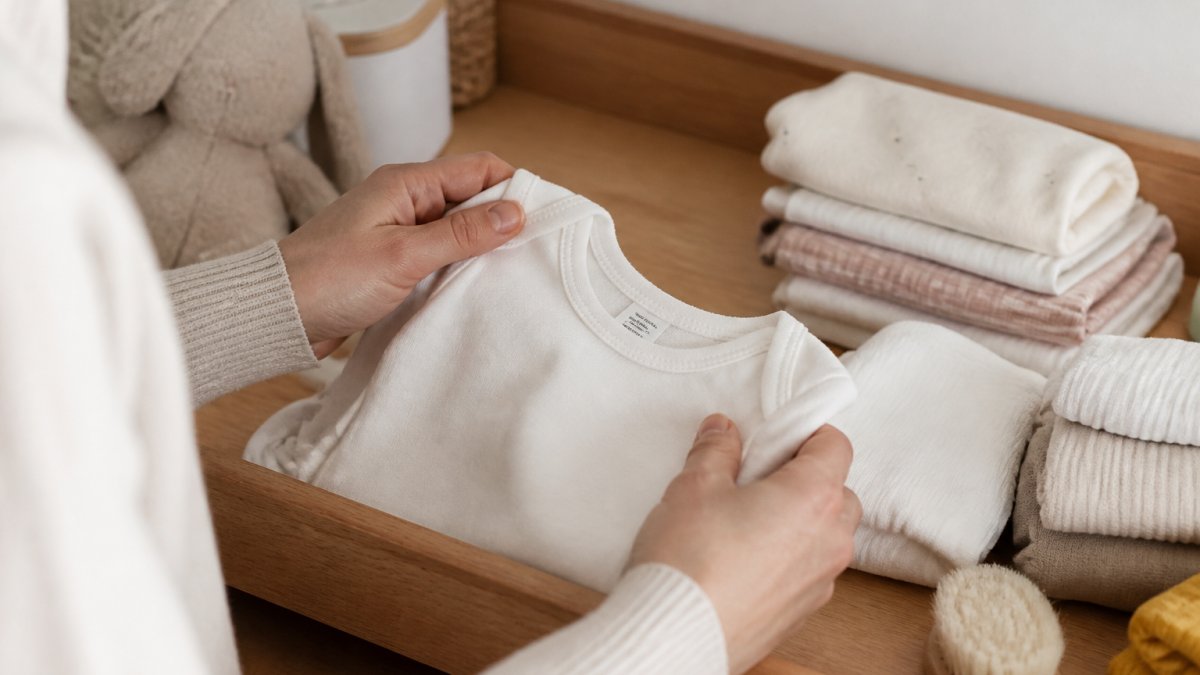
One honest caveat: a GOTS label tells you about the textile, not fit, durability, or washing-machine survival.
What GOTS Certification Does Not Guarantee
GOTS certification does not guarantee a product is allergen-free, does not cover farm workers' social conditions under all schemes, and does not certify the retail store or brand. It certifies textile processing along a specific chain.
Here is the list we wish more parents saw before they shop:
- Not a safety certification. It is not a substitute for children's sleepwear flammability rules or any consumer product safety requirement.
- Not a durability test. Nothing in the standard measures how a garment holds up after 50 washes.
- Not a brand endorsement. A brand can sell GOTS-certified products and non-certified ones side by side.
GOTS is strong on processing and traceability, but it is not a universal ethics seal for every hand that touches the cotton.
The Label-Grade Trap: "Organic" vs. "Made with Organic"
A GOTS label does not mean every certified product is 95% organic. The standard has two label grades, and the difference is a single word on the packaging:
| Label Grade | Organic Fibre Minimum | What the Label Says |
|---|---|---|
| "Organic" | 95% | "GOTS organic" |
| "Made with organic" | 70% | "Made with X% organic" |
| Below 70% | Not eligible | Cannot carry the GOTS label |
Both grades are legitimate GOTS claims, and both require the same chemical and labor criteria across the whole product. But "made with organic" can contain up to 30% non-organic fibre. If your reason for buying is organic fibre content, read the grade, not just the logo.
Facility Certification Is Not Product Certification
A certified facility has passed an audit for the processes it performs. It does not mean every product that leaves that facility is certified, only products within its certified scope, made with certified inputs, are. A brand can hold a valid supplier certificate and still sell non-certified items alongside certified ones. The certificate is real; the blanket claim may not be.
Standard Versions and Expiry Dates Change the Claim
GOTS is a living standard, revised periodically, and certificates reference the version they were audited against. An older-version certificate may remain valid until expiry, but the requirements it was checked against are not the current ones. Certificates also expire; a lapsed certificate means the claim no longer holds, even if the label is still on a garment in a warehouse.
What "Pesticide-Free" and "Chemical-Free" Actually Mean
GOTS restricts synthetic pesticides in organic fibre production and bans a long list of hazardous chemicals in processing. It does not make a product "chemical-free", no textile is. It means the inputs are restricted and audited, not absent. Similarly, "carbon-neutral" and "universally fair labor" are not GOTS claims: the standard is not a carbon offset program and does not audit farm labor under all schemes.
Key Takeaway
GOTS is a strong, audited chain-of-custody standard for organic fibre and responsible processing. It is not a safety certification, a durability test, a brand endorsement, or a permanent status. Read the label grade, check the certificate scope and expiry, and match the certified entity to the product in your hand.
Conclusion
Reading a certification label shouldn't require a research project, but the difference between "organic" and "GOTS organic" is real, and it's printed in small type on the tag.
We built Modocam Kids for parents who want that clarity without the guesswork. Browse our children's cotton tees and baby essentials, and check the fabric details on every product page before you add to cart.

Frequently Asked Questions
Which is better, OEKO-TEX or GOTS?
They answer different questions. OEKO-TEX focuses on chemical safety in the finished textile, testing for harmful substances. GOTS covers the whole chain: organic fibre content, chemical restrictions in processing, wastewater treatment, and social criteria for workers. If you want proof that a garment is made from organic fibre and processed responsibly, GOTS gives you that. If you only need reassurance about chemical residues, OEKO-TEX covers it. Many brands hold both, and the two are complementary rather than competing.
What's the difference between organic cotton and GOTS-certified cotton?
Organic cotton refers to how the fibre was grown: no synthetic pesticides and no genetically modified organisms. GOTS-certified cotton means the fibre was grown organically and the rest of the supply chain, from ginning through dyeing and finishing, met the standard's chemical, wastewater, and labor criteria. A product can be made from organic cotton without being GOTS certified. Only a valid scope certificate and label grade confirm the full chain was inspected by an approved certification body.
How can I verify that a product is GOTS-certified?
Look for the GOTS logo with a license number, then check that number in the public GOTS database. Ask the brand for its scope certificate, which names the certified facility and the product categories it covers. Confirm the label grade matches the claim: 95% or more organic fibres for 'organic,' at least 70% for 'made with organic.' A brand that cannot produce a certificate number or whose number does not appear in the database has not shown you a verified certification claim.
Is GOTS-certified cotton safe for babies?
GOTS bans a long list of hazardous chemicals in processing, requires wastewater treatment at wet-processing facilities, and restricts residues in the finished textile. That makes it a reasonable choice for baby clothing and bedding that sits against skin all day. It is not a medical or safety certification, though. Always follow the care label, wash new items before first use, and check for any additional safety labeling on the garment itself.

