

Cart
0
Last Updated: November 4, 2026
Quick Summary
To know how to tell if baby clothes will shrink, check the fiber content and the care tag before buying. Natural fibers like cotton, wool, linen and bamboo viscose shrink most, and any tag calling for heat is a warning sign.
- Pure cotton can shrink noticeably after a hot wash and tumble dry.
- Pre-shrunk means most shrinkage happened at the factory, but heat can still shrink it a little.
- Wool can shrink several sizes when washed in hot water with agitation.
- Wash baby clothes in cold water on a delicate cycle and air dry to prevent shrinking.
- Dryer heat is the number one cause of shrinkage in baby clothes.
Table of Contents
- How to Tell If Baby Clothes Will Shrink: The Warning Signs
- What Does Pre-Shrunk Mean on Clothing Labels?
- Which Fabrics Are Most Likely to Shrink
- How to Know When to Go Up a Size in Baby Clothes
- The Best Way to Wash Baby Clothes to Prevent Shrinking
- Drying Methods That Cause Shrinkage and How to Avoid Them
- Brand Sizing Varies More Than You Think
- Build a Baby Wardrobe That Holds Its Fit
- Frequently Asked Questions
How to Tell If Baby Clothes Will Shrink: The Warning Signs
Knowing how to tell if baby clothes will shrink starts with two labels: the fiber content and the care tag. Natural fibers like cotton and wool shrink most, and any tag that calls for heat is a warning sign. Many parents have bought a onesie that fit perfectly and came out of the dryer doll-sized. Below, we break down the exact signals to check before you buy, so the fit you pay for is the fit your baby keeps.
Fabric shrinkage is the permanent loss of garment dimensions caused by fiber swelling, heat exposure, and mechanical agitation during washing and drying. It cannot be reversed.
Read the Fiber Content First
Fiber content tells you the most about shrink risk. Pure cotton can shrink noticeably after a hot wash and tumble dry, while polyester and other synthetics hold their shape. Check the label before you fall in love with a print. A cotton-poly blend usually lands in the middle. If you want the full picture on organic options, our guide to what GOTS certified organic cotton means for parents explains the certification and why it matters for sensitive skin.
- High shrink risk: 100% cotton, wool, linen, bamboo viscose
- Medium risk: cotton-poly blends
- Low risk: polyester, nylon, spandex blends
Check the Care Tag for Heat Warnings
The care tag is a shrink forecast in plain text. Look for three things:
- A tumble dry setting (heat is the biggest cause of fabric contraction)
- Washing instructions above cold water
- Any ironing symbol with dots
A tag that says "machine wash cold, tumble dry low" is telling you the garment can handle some heat but will still move. A tag that says "line dry" is telling you the maker already knows heat is a problem. When a tag warns about heat, believe it.
What Does Pre-Shrunk Mean on Clothing Labels?
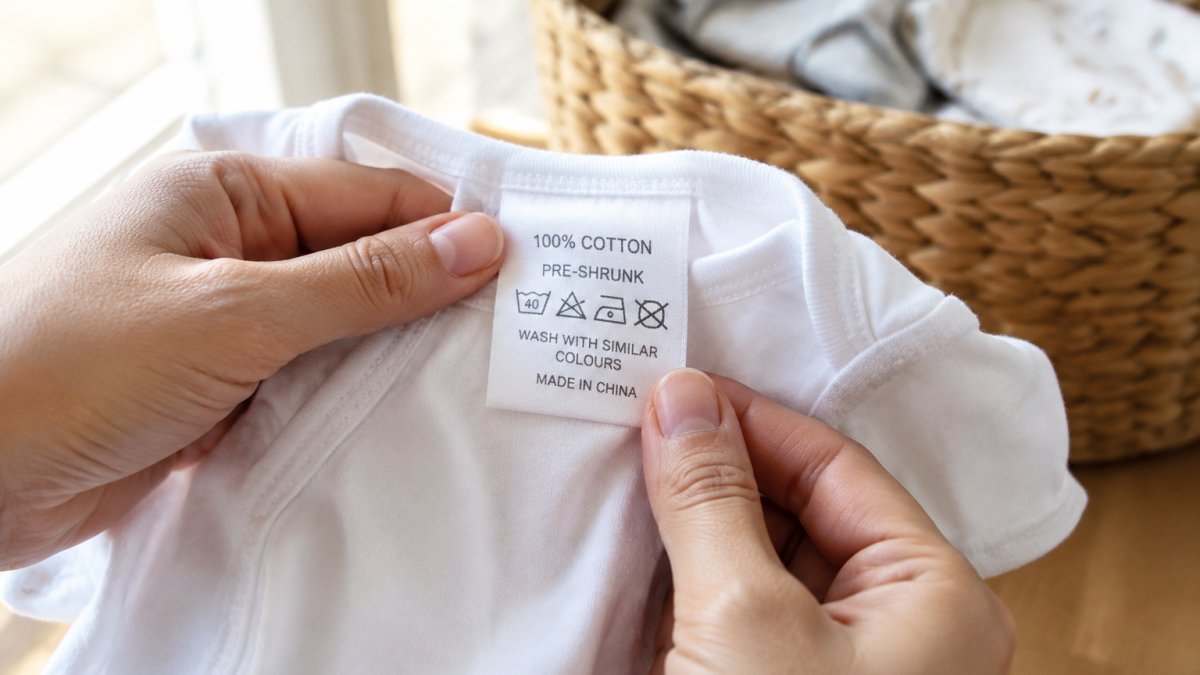
Pre-shrunk means the fabric was washed or treated at the factory before sewing, so most of its shrinkage already happened. The garment should hold its size through normal washing. It is not a guarantee, though. Pre-shrunk cotton can still shrink a little with hot water and high dryer heat. Treat the label as a head start, not a free pass.
Which Fabrics Are Most Likely to Shrink
Natural fibers shrink the most, and synthetics shrink the least. That single rule covers most of what you will find on a baby clothing rack.
Cotton, Wool, and Natural Fibers
Cotton fibers swell when wet, then contract as they dry, especially under heat. Wool is worse: hot water and agitation cause the fibers to lock together, and the garment can come out several sizes smaller. Bamboo viscose behaves like cotton and can shrink on the first wash. These fabrics are soft and breathable, which is why babies live in them, but they need gentle laundry care.
Synthetic Blends and Why They Hold Their Shape
Polyester, nylon, and spandex are manufactured fibers. They resist fiber swelling, so they keep their garment dimensions through repeated wash cycles. That is why many pajamas and play clothes use blends. The trade-off is breathability. If you are weighing fabric choices for a new baby, our guide on whether bamboo fabric is good for babies covers the comfort side of that decision.
Shrink risk comes down to fiber content, and the article groups fabrics into three tiers.
| Fabric | Shrink risk | Note |
|---|---|---|
| 100% cotton | High | Shrinks noticeably after hot wash and tumble dry |
| Wool | High | Hot water and agitation can shrink several sizes |
| Linen | High | Listed among high shrink risk fabrics |
| Bamboo viscose | High | Behaves like cotton, can shrink on first wash |
| Cotton-poly blends | Medium | Usually lands in the middle |
| Polyester | Low | Resists fiber swelling, holds shape |
| Nylon | Low | Manufactured fiber that keeps dimensions |
| Spandex blends | Low | Resists fiber swelling through wash cycles |
How to Know When to Go Up a Size in Baby Clothes
Go up a size when your baby's current clothes show fit stress: skin imprints from cuffs, wrist length that stops short, or pant leg creep above the ankle. Weight-based sizing charts matter less than how the garment actually sits.
Watch for these signs:
- Snug cuffs leave red marks on wrists or ankles
- The onesie snaps pull tight across the belly
- Shoulders no longer line up with the seams
- Toes curl inside footed sleepers
Growth spurts can erase a size in weeks, so buy for the next few months, not today. A slightly roomy fit also leaves margin for shrinkage after the first wash. If you are unsure, size up.
The Best Way to Wash Baby Clothes to Prevent Shrinking
The best way to wash baby clothes to prevent shrinking is a cold water wash on a delicate cycle, followed by air drying. Cold water limits fiber swelling, and skipping the dryer removes the heat that drives fabric contraction.
Follow this routine:
- Sort natural fibers away from synthetics
- Wash in cold water on a gentle or delicate cycle
- Skip the heavy spin and hot rinse options
- Reshape garments while damp
- Air dry flat or on a line
Use a gentle detergent made for baby skin. Our guide to gentle baby laundry detergent for eczema covers what to look for on the label.
Drying Methods That Cause Shrinkage and How to Avoid Them
Dryer heat is the number one cause of shrinkage in baby clothes. High heat plus tumbling breaks down fibers and locks in contraction. Air drying is the safest method, but it is not the only one, and the right choice depends on the fabric in the drum.
- Line or flat air dry: lowest risk, best for cotton and wool
- Tumble dry low: acceptable for sturdy blends
- Tumble dry high: avoid for anything with natural fibers
- Dryer balls on low: helps separate fabrics and cuts drying time
Watch out: a hot dryer cycle can shrink a cotton onesie noticeably. When in doubt, pull garments out while slightly damp and finish them on a rack.
Low-Heat Tumble Drying vs. Rack Drying by Fabric
Not every delicate fabric responds the same way to the same drying method. Use this as a decision guide:
- Bamboo viscose: the most heat-sensitive common baby fabric. Low-heat tumble drying still risks contraction because the fiber loses strength when wet and stretches under tumbling weight. Rack or flat drying is the safer default; if you must tumble, use the lowest heat setting and pull the garment out while still damp.
- Organic cotton: more forgiving than bamboo but still shrinks under heat. Low-heat tumble drying is acceptable for sturdy jersey and terry, but expect some length loss over repeated cycles. Rack drying preserves the original fit longest.
- Wool: never tumble. Agitation plus heat causes the fibers to lock together, and the garment can felt and shrink several sizes. Roll in a towel to remove water, then dry flat.
- Cotton-poly blends and synthetics: the best candidates for low-heat tumble drying. They resist fiber swelling and tolerate gentle tumbling without meaningful contraction.
How to Rack Dry Without Stretching the Garment
Rack drying has its own failure mode: a wet cotton or bamboo garment hung by the shoulders can stretch out of shape under its own weight. Flat drying is generally considered the safest compromise:
- Lay the garment flat on a mesh drying rack or a clean towel.
- Reshape the shoulders, cuffs, and hem while damp so the piece dries in its intended dimensions.
- Keep the rack out of direct sun, which can fade dyes and stiffen fibers.
- Flip the garment once halfway through so both sides dry evenly.
Watch out: hanging a wet knit by the shoulders is a common cause of stretched necklines and long, misshapen sleeves, the opposite problem from shrinkage, and just as hard to undo.
When Low-Heat Tumble Drying Is the Right Call
Tumble drying on low is not a failure. It is the practical choice for sturdy blends, pajamas, and anything that needs to be back in rotation quickly. The trade-off is small, gradual length loss over many cycles rather than a single dramatic shrink. If a garment fits with little margin, rack dry it; if it fits roomy, low heat is fine. For parents managing a full wardrobe, our tips on organizing baby clothes in small apartments can help you keep a drying rotation that does not depend on the dryer.
Brand Sizing Varies More Than You Think
Two brands can label the same garment "3-6 months" and fit completely differently. Label accuracy varies, so treat size charts as a starting point, not a promise. Length-based sizing and weight-based sizing also disagree, and a brand's cut can run small or roomy from season to season.
Before you buy, check three things:
- The brand's own size chart, not a generic one
- Customer notes on whether the item runs small
- The fiber content, since high-shrink fabrics need extra room
Build a Baby Wardrobe That Holds Its Fit
A wardrobe that survives the wash starts with smart fabric picks. Favor pre-shrunk cotton, blends, and garments with clear cold-wash care tags. Buy a little roomy in natural fibers, and keep the dryer on low or skip it entirely. For help spotting quality before checkout, read our guide on how to spot quality baby clothes before you buy. And if space is tight, our tips on organizing baby clothes in small apartments keep the rotation manageable.
Modocam Kids offers a range of baby and children's clothing, and you can browse current selections on our website.
Frequently Asked Questions
Will my baby's clothes shrink in the dryer?
Yes, often. Dryer heat is the biggest cause of baby clothes shrink, especially in cotton garments. High heat causes cotton fibers to contract, and the tumbling action adds to it. If you need to use a dryer, choose the lowest heat setting and remove items while still slightly damp. Air drying on a rack is the safest option for anything you want to keep true to size.
What does pre-shrunk mean on clothing labels?
Pre-shrunk means the fabric was washed or treated at the factory before sewing, so most of its shrinkage already happened. These garments will still shrink slightly in future washes, but far less than untreated cotton. A label that says pre-shrunk is a good sign, but it does not make the item shrink-proof. Always follow the care instructions to protect the fit.
Which fabrics are most likely to shrink in baby clothing?
Pure cotton, wool, and other natural fibers shrink the most because their fibers swell and contract when exposed to heat and water. Synthetic blends like polyester and spandex usually hold their shape better. If you are buying cotton baby clothes, look for pre-shrunk labels or size up one step to allow for natural contraction after the first few washes.
How can I tell if a garment is pre-shrunk?
Check the care tag for the words pre-shrunk or pre-washed. You can also feel the fabric: pre-shrunk cotton often feels slightly denser and less stiff than untreated cotton. If the label lists cotton with no pre-shrunk note and recommends cold washing, treat it as a garment that will shrink and plan your sizing accordingly.
The next time you shop, flip the tag before you add to cart. Check the fiber, read the care symbols, and plan for the first wash. Modocam Kids makes that easier with a curated selection of baby and kids clothing built around comfort and care, plus maternity gear and strollers in one place. Get started with Modocam Kids and build a wardrobe that keeps its fit.

